
THE CENTRAL IDEA
Put ideas about learning, therapy and neuroplasticity into perspective.
Threat responses involve coordinated systems
When the brain detects possible danger, attention, memory, autonomic arousal, and action systems change together. This can happen rapidly. The amygdala is often mentioned in discussions of fear, but it is one part of a larger network. The prefrontal cortex, hippocampus, insula, brainstem, and other regions also contribute depending on the task and context.
Learning changes future responses
A situation followed by danger can become a cue for fear. A behavior followed by relief can become more likely to occur again. These learning processes help explain why avoidance, checking, reassurance, and rituals can become persistent. They also explain why new experiences can weaken old predictions. Psychological treatment often works by creating repeated opportunities for different learning.
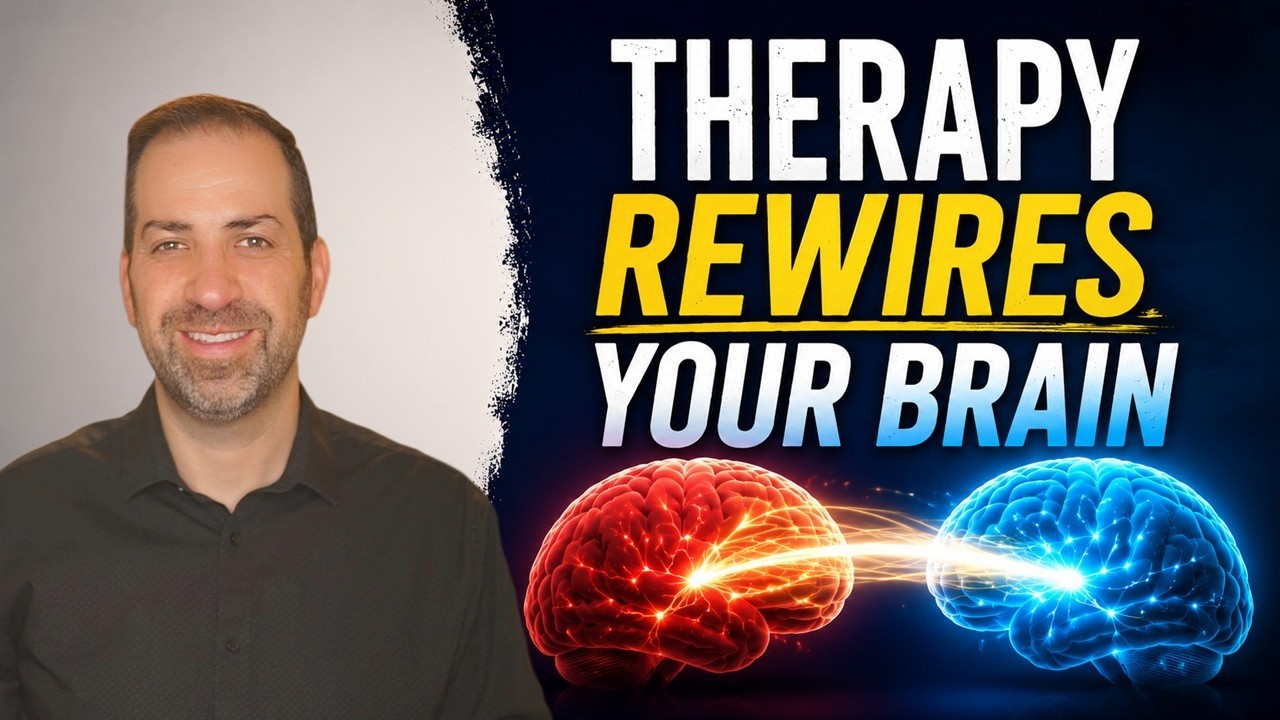
Neuroplasticity is real but often oversold
The brain changes with experience throughout life. That does not mean every habit can be “rewired” quickly or that a particular exercise produces a predictable structural change. Claims about neuroplasticity are strongest when they stay close to measured behavior and established neuroscience rather than using brain language as a marketing label.
Good psychology does not require a brain scan
A psychological explanation can be useful even when it is described at the level of thoughts, emotions, habits, and behavior. Brain findings can add information, but they do not automatically make an explanation more scientific. For most common anxiety and mood problems, careful assessment of patterns in everyday life remains highly informative.
Brain regions are not simple switches
Popular explanations often describe one brain region as emotion and another as logic. Real brain function is distributed across networks, and the same region can contribute to several processes. These metaphors can be useful teaching tools as long as they are not treated as literal maps.
Simple chemical stories are incomplete
Neurotransmitters are involved in mood and anxiety, and medications can be effective. That does not establish a one-chemical explanation for a psychological disorder. Biology, learning, stress, behaviour, cognition, relationships, and environment interact.
Ask what the brain language adds
A useful test for a neuroscience claim is to ask what was actually measured and whether the brain terminology adds information beyond a behavioural description. If a claim sounds scientific mainly because it names a brain area, skepticism is appropriate.
Brain explanations should stay modest
Neuroscience can make psychological ideas easier to understand, but simple brain stories are often presented with more confidence than the evidence supports. Emotions and behaviour do not come from one isolated “fear centre,” “logic centre,” or chemical switch. They emerge from interacting systems, learning history, attention, context, physiology, and current goals. Brain imaging can show associations without telling us that one region caused a complex experience. A useful brain explanation should clarify a psychological process without pretending that a scan or neurotransmitter label explains the whole person. When a neuroscience claim sounds unusually simple, permanent, or certain, it is worth asking what the underlying research actually measured.
Change needs a useful measure
AN EVERYDAY EXAMPLE · FICTIONAL
After hearing that therapy can change the brain, a person expects every practice session to produce a clear feeling of progress. A difficult week then seems to prove that nothing is changing. But a broad statement about learning cannot provide a day-by-day test of recovery.
More useful questions concern observable life changes: responding differently to a thought, returning to an activity or using support earlier. Brain-based explanations can be interesting without becoming a promise about how quickly an individual will improve.
Questions to reflect on
- What change in daily life would matter to me?
- Am I using a scientific explanation as a guarantee it cannot provide?
Use these questions to describe a pattern or prepare for a conversation with a professional. They are not a diagnostic test.
Watch the ideas in context

Continue reading
Sources & further reading
For additional information about the clinical ideas discussed here:
- National Institute of Mental Health: Psychotherapies.
Examples on this page are illustrative and do not describe actual patients. About these resources.
This guide offers general education. It cannot diagnose symptoms, assess risk or provide an individual treatment plan. For personal advice, contact an appropriate health professional. Finding help and urgent support.